
 Download App
 Join
Join Support














How to Train Your NEW Puppy! – 5 Simple Steps
Introduction:
Bringing a new puppy home is an exciting and rewarding experience, but it also comes with responsibilities. Training your puppy early is crucial for fostering good behavior, building trust, and ensuring a harmonious relationship.
With patience, consistency, and the right approach, you can teach your puppy essential skills and habits that will last a lifetime.
1. Training Techniques and Tools for Puppies.
2. Hand Commands.
3. Voice Commands
4. Leash Training.
5. E-Collar Conditioning.
1. Training Techniques and Tools for Puppies.
Training your puppy is essential for building a strong bond, ensuring good behavior, and providing mental stimulation. Whether you have a dog or other companion animal, combining effective techniques with the right tools can lead to successful results.

Training Techniques:
1.Positive Reinforcement: Rewarding desired behavior with treats, praise, or play encourages puppies to repeat it.
2.Clicker Training: Using a small device that makes a clicking sound to mark the exact moment a puppy performs a correct behavior, followed by a reward.
3.Consistency and Repetition: Training sessions should be regular and consistent to help puppies learn and retain commands.
4.Redirecting Unwanted Behavior: Gently guide your puppy to an acceptable activity when they display undesirable actions.
Training Tools:
1.Treats and Toys: Useful for motivation and reward during training sessions.
2.Leashes and Harnesses: Provide control during outdoor or leash-based training.
3.Clickers: Enhance precision in training through sound association.
4.Crates and Pens: Aid in-house training and create safe spaces for your puppy.
Successful training requires patience and understanding. Tailor techniques to your puppy’s personality and needs, and always prioritize positive, humane methods for a happy and well-adjusted companion.
2. Hand Commands:

Hand commands are a vital part of training puppies, offering a clear, non-verbal way to communicate.
They are particularly useful in noisy environments or when verbal commands may not be effective. By associating specific gestures with desired behaviors, puppies can quickly learn to respond and obey.
Key Hand Commands for Puppy:
1.Sit: Hold your palm up, then move it upward to signal your dog to sit.
2.Stay: Extend your hand out with the palm facing forward as a stop signal.
3.Come: Sweep your hand inward toward your chest to call your dog to you.
4.Down: Point downward with your index finger to instruct your dog to lie down.
5.Heel: Pat your leg to indicate the dog should walk beside you.
Hand Commands for Puppy:
While puppies are more independent, hand signals like pointing to a specific spot for “jump” or holding your hand up for “stay” can be taught using treats and repetition.
Training Tips:
Consistency is key when teaching hand commands. Pair gestures with verbal cues initially and reward your puppy with treats or praise when they respond correctly. Over time, the hand gestures alone will suffice. Regular practice builds trust and strengthens the bond between you and your puppy.
3.Voice Commands:

Voice commands are a fundamental aspect of puppy training, enabling clear communication between owners and their animals. When used consistently, voice commands help establish expectations and strengthen the bond with your puppy.
Key Voice Commands for your Puppy:
1.Sit: A simple “Sit” helps your dog understand when to stop and settle down.
2.Stay: Tell your dog to remain in a specific position until released.
3.Come: Encourages your dog to approach you, essential for safety.
4.Leave It: Teaches your dog to avoid undesirable objects or actions.
5.Heel: Directs your dog to walk closely beside you during walks.
Voice Commands for Puppy:
Though puppies are less inclined to obey commands, they can learn phrases like “Come,” “Stay,” or “No” with consistent training and positive reinforcement.
Training Tips:
Use a clear, calm, and firm tone when issuing commands. Pair verbal cues with rewards like treats, toys, or praise to encourage desired behaviors. Repetition is crucial; practice regularly in short sessions to prevent fatigue. Avoid yelling or frustration, as it can confuse or frighten your puppy.
Over time, your puppy training will associate specific commands with actions, making communication effortless.
4.Leash Training:

Technique:
Use leash pressure to gently enforce obedience, creating “butter-soft” control.
Teach loose leash walking, directional guidance, and corrective actions for unwanted behaviors.
Progression:
Gradually incorporate voice commands into leash training to ensure the puppy’s responses are consistent without constant physical guidance.
5.E-Collar Conditioning:
E-collar (electronic collar) conditioning is a training method that uses a remote-controlled device to deliver mild stimulation, vibration, or sound to guide a puppy’s behavior.
Properly introduced, an e-collar can be a valuable tool for reinforcing commands, ensuring off-leash control, and addressing problem behaviors.
Steps for Effective E-Collar Conditioning:
1.Introduce the Collar: Begin by letting your puppy wear the e-collar without activation to ensure comfort and familiarity. This prevents any negative associations.
2.Associate Commands with Stimuli: Use the e-collar alongside established commands like “Come” or “Stay.” Apply the lowest effective stimulation level and release it as soon as the puppy complies.
3.Pair with Positive Reinforcement: Reward your puppy with treats, praise, or affection after successful responses to commands, making the experience positive.
4.Gradual Off-Leash Transition: Once your puppy reliably responds to commands with the e-collar, gradually transition to off-leash training in safe, enclosed spaces.
Best Practices:
1.Always use the lowest stimulation level necessary.
2.Avoid using the e-collar as punishment.
3.Consult a professional trainer for guidance, especially for sensitive or anxious puppies.
E-collar conditioning, when applied humanely and responsibly, can enhance communication and build trust, fostering better behavior and safety for your puppy.
Key Training Principles:

Layering Commands:
Build upon foundational skills (progressing from food to hand to voice, leash, and e-collar).
Timing and Clarity:
Pair new commands or stimuli with known behaviors to ensure proper association.
Consistency:
Practice in controlled environments before moving to areas with distractions.
Positive Reinforcement:
Reward correct behaviors to motivate and solidify learning.
Conditioning Tools:
Ensure tools like e-collars are associated with guidance and positive communication, not punishment.
Conclusion:
“Feeding and treating your dog is not just about providing nutrition or entertainment; it’s about nurturing a balanced state of mind and body. At the Dog Psychology Center, we believe in the importance of timing, intention, and the quality of what we offer our dogs.
Visit: petsfolio to learn more about: How to Train Your NEW Puppy! – 5 Simple Steps
Send us a Message
Enjoy this post?
Check out some more great articles and other content.
Celebrating Holi with your furry friend can make the festival of happiness, togethern...
Read The Article by: petsfolio

With human life being more and more influenced by technology, dog behavior is becomin...
Read The Article
by: petsfolio
To train your dog properly, every walk should feel calm, enjoyable, and well-controll...
Read The Article
by: petsfolio
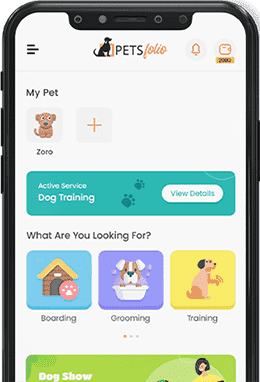
Download the Petsfolio App
Simplify your pet care services by booking and tracking them for free.